Bikepacking to Kunsten Festival Watou, Belgium
Notes is a series of short-form photo-essays on art and thoughts in orbit.
〰️
Notes is a series of short-form photo-essays on art and thoughts in orbit. 〰️
Jesse Jones, Syllabus (2020- )
23 September 2026
My goal of bikepacking to more art events led me to plan a late summer cycle route that incorporated the Kunsten Festival Watou in Belgium. Art festivals and biennials have been rightly criticised for their carbon footprint with international visitation contributing a large percentage of this calculation. Traveling by bike has been one way I have reduced my art carbon footprint and in the process it has added a new dimension to my bikepacking trips. My cycle journeys now have more variation and purpose as well as saving some cost by camping along the way. In turn, I have found that my engagement with art is more attentive, possibly due to the fact I am pumped high on endorphins. Overall the combination of bikepacking and art deepens my understanding of places and boundaries of places.
This year I wanted less challenges on the cycling end of things. I desired a geography with less climbs and more time for relaxation, reading and eating good food. Belgium was an obvious choice for being mostly flat and having an incredible network of cycling paths. Spanning canal tow paths to rural cycle highways and segregated on road routes, Belgium like the Netherlands and Denmark is the gold standard for active travel infrastructure and has the added bonus of great pastries and beer to fuel the legs.
After an overnight train from Aberdeen to London, a further train from London to Dover, then a ferry to Calais, totalling 24 hours of travel, I was able to start peddling. Following the Eurovello 5, with a few gravel road detours, it took me about three days to arrive in Gent where I spent a day exploring the city and visiting S.M.A.K. I then looped back south west to the borderlands of Belgium and France to attend the Watou festival.
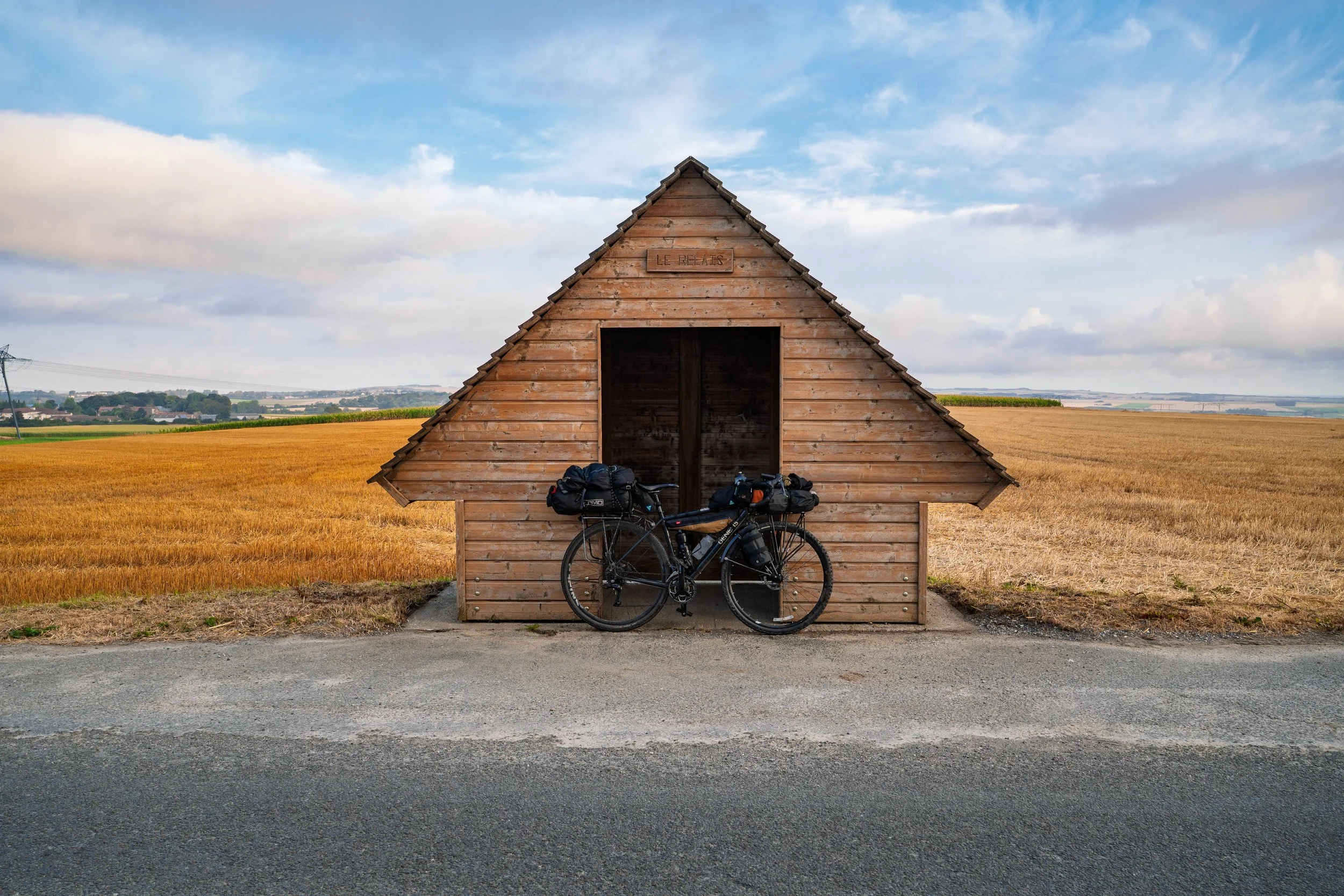
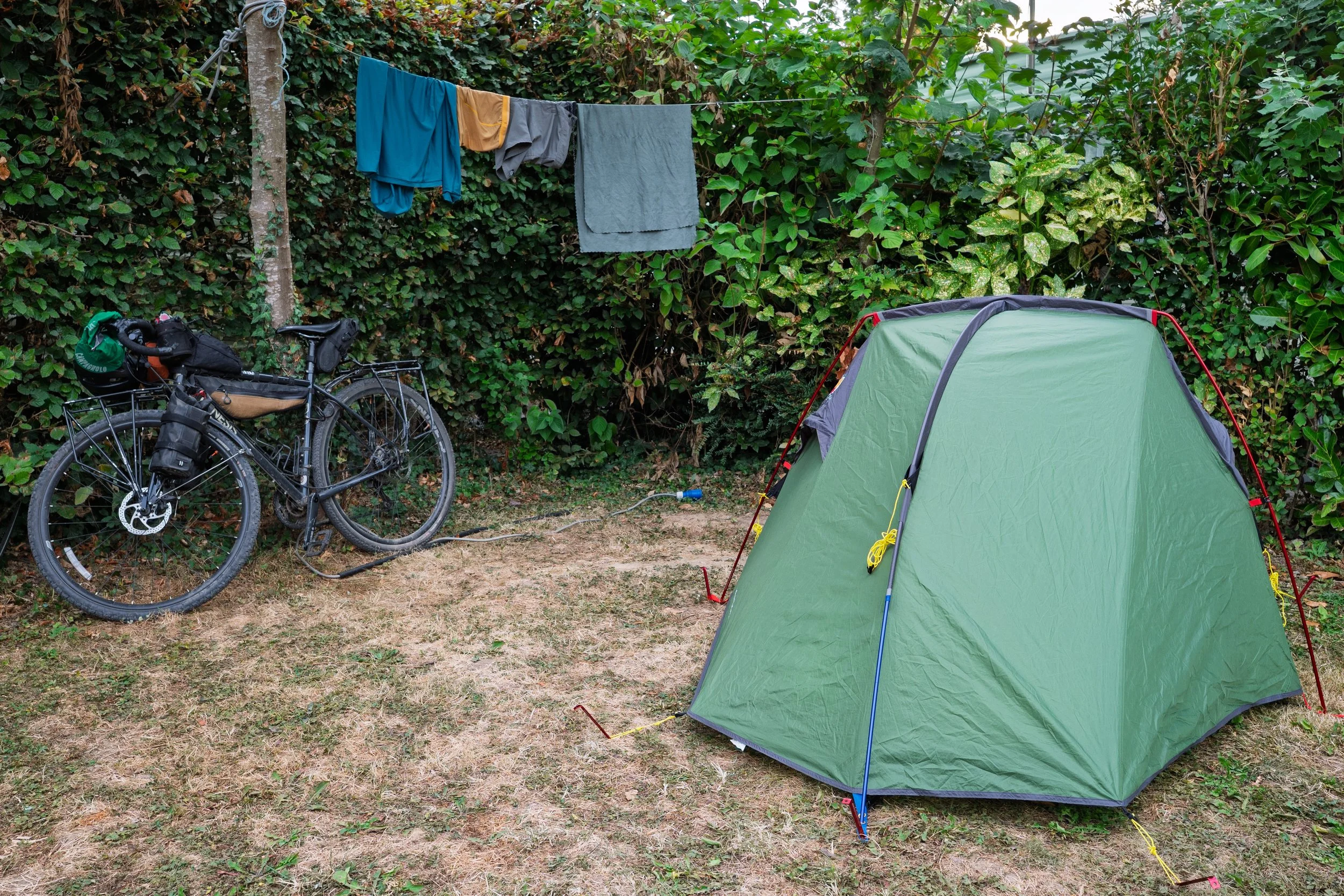
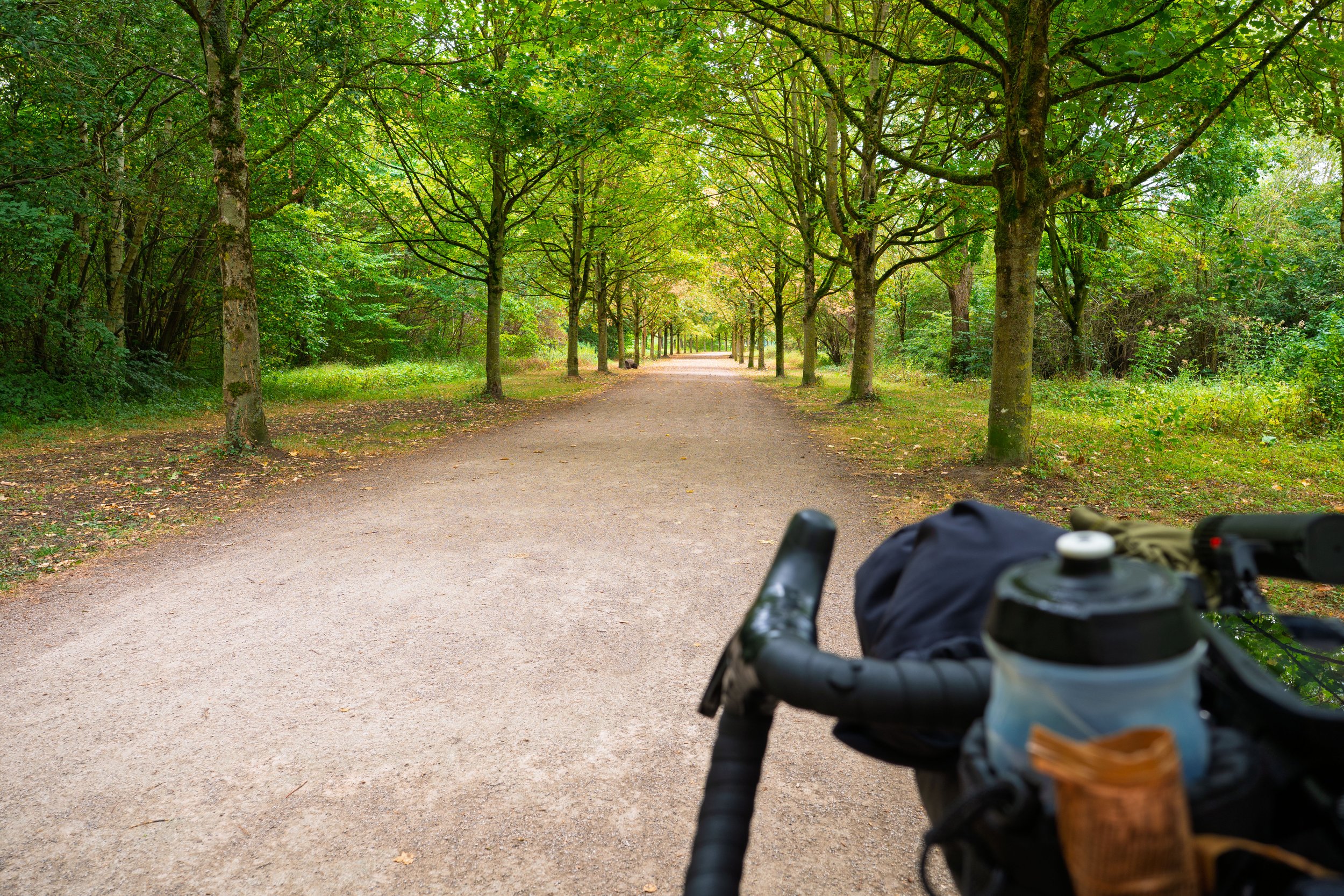
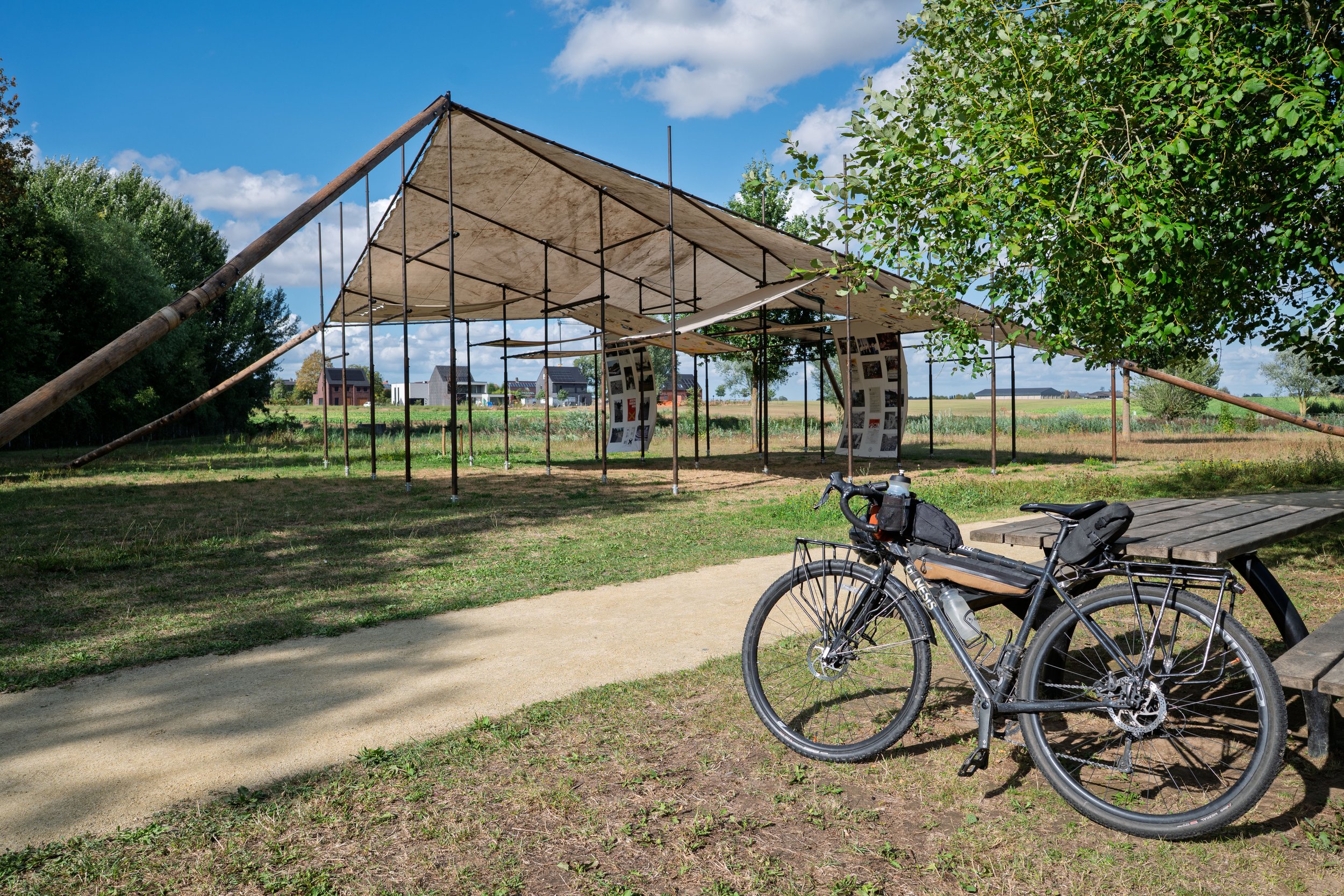
There has been an art festival in Watou for over 40 years and from 2021 the town has invited guest curators to scale-up its ambition. The 2026 iteration’s concept was ‘Gemene Wegen’ (Shared Roads) taking cue from the Gemenestraat road that runs through Watou and continues on to bisect the Belgium/French border. Having crossed the border by bike a few days earlier I felt well primed with experiential understanding of the borderlands, its porousness of environment and gradual differences in architecture, language and culture. “A ‘shared road’ is a shared responsibility between multiple parties, a place of cooperation, but also of potential friction,” write curators Daniëlle van Zuijlen, Bart Lodewijks, and Michaël Vandebril. For me, works that responded to the social friction angle of this theme were the most compelling.
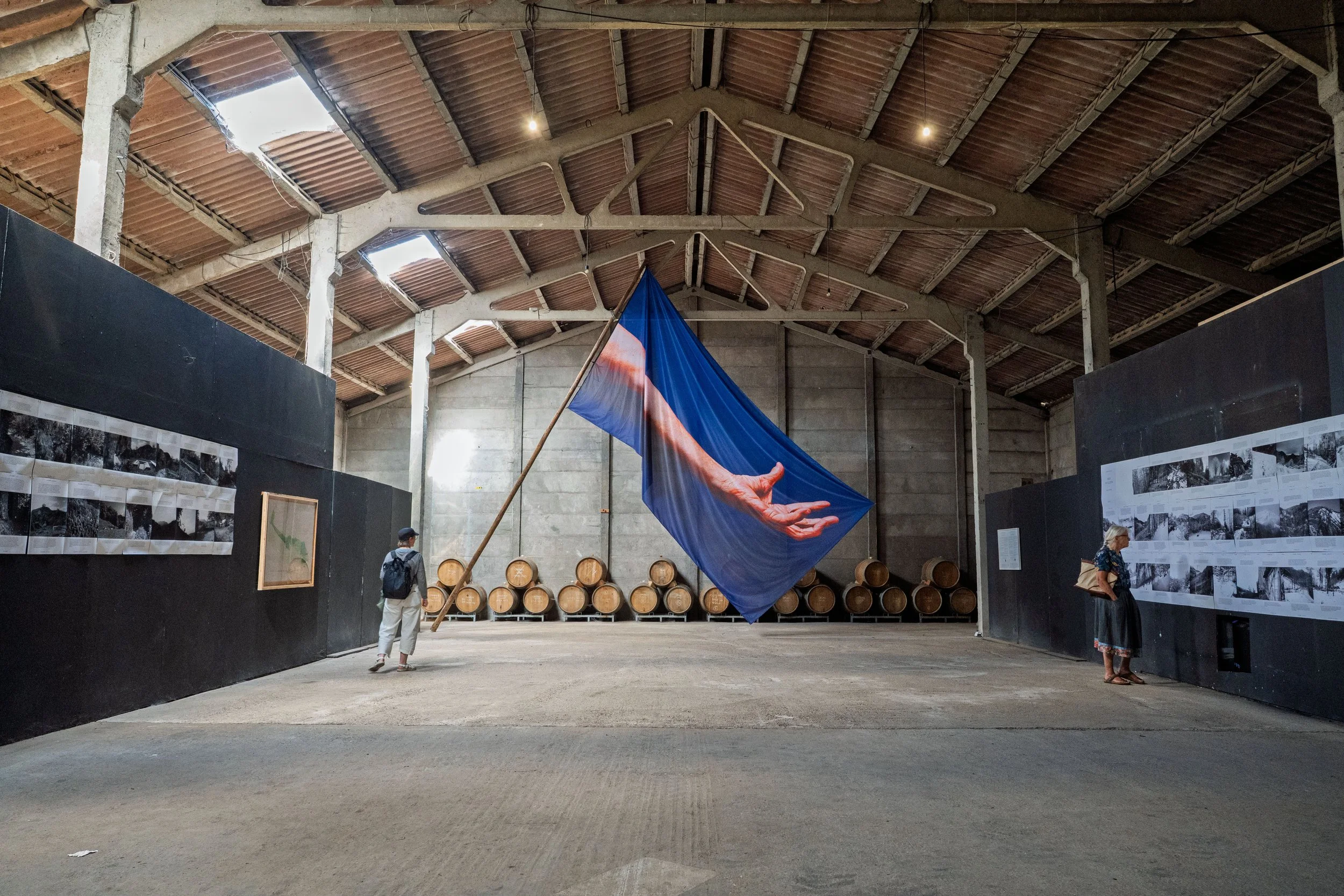
Of these works was Syllabus by Irish artist Jesse Jones whose monumental gesture alludes to the fictitious sorcery at play within social and legal contracts. Encompassing the height of a three story barn, this large semi-transparent flag (12m x 24m) features an image of an outstretched arm and hand poised as if clasping an imaginary crystal ball or summoning invisible energy. A label informs us that the arm belongs to renowned feminist theorist Silvia Federici. On a nearby wall was a poster reproduction of a contract between Jones and Kunsthall Gent outlining the parameters of loaning, caring and showing the work for a period of five years. At first the contract reads standard fair until clause four where she issues a warning to management that “they will be blotted out from the Book of Life” if they interfere with the rights gallery workers who refuse to activate the work (the original incarnation of the work was a curtain that got performatively pulled along a track by staff). Jones ends the agreement by assigning Federici as the arbitrator and “woman of credit” who will rule over any disputes.
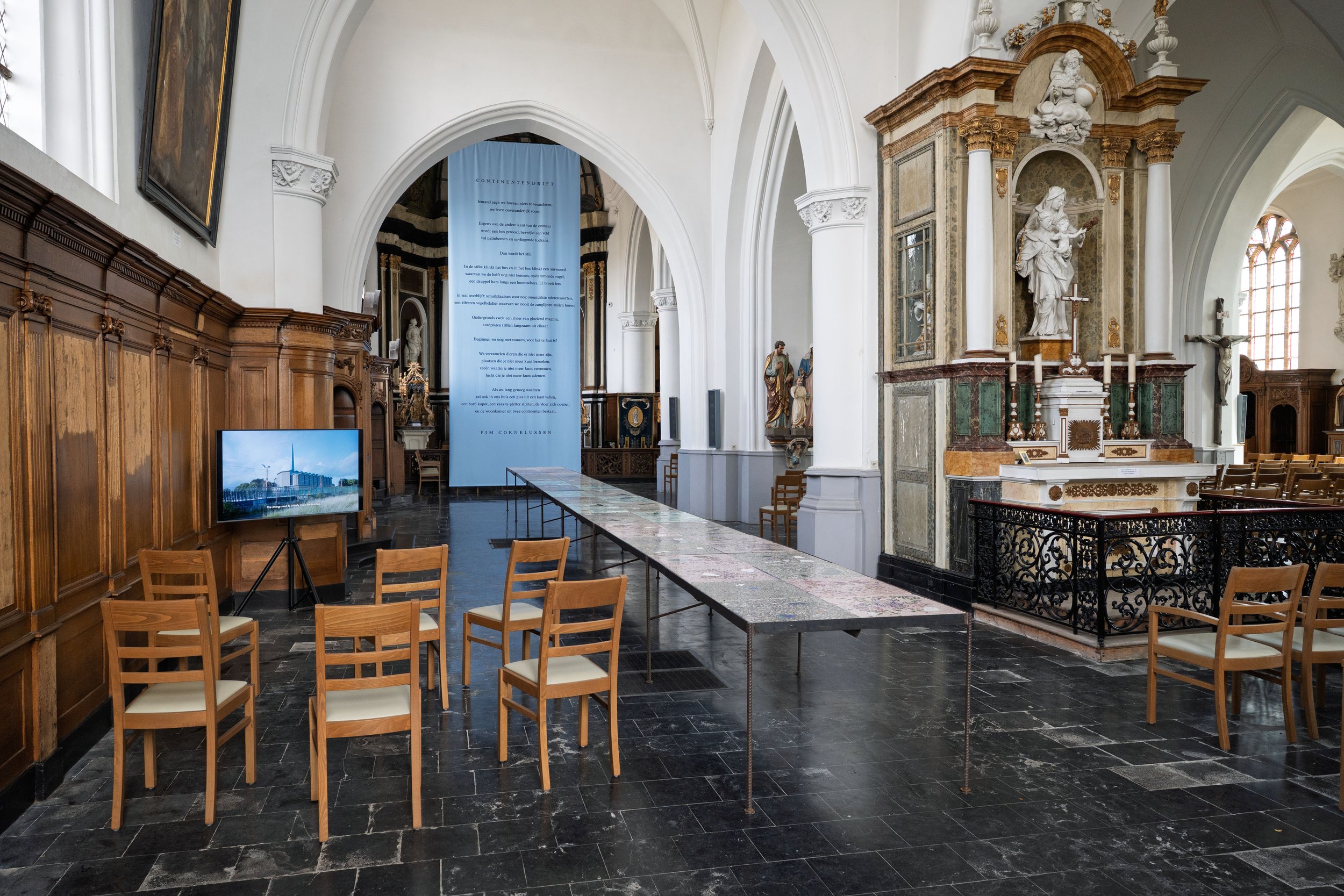
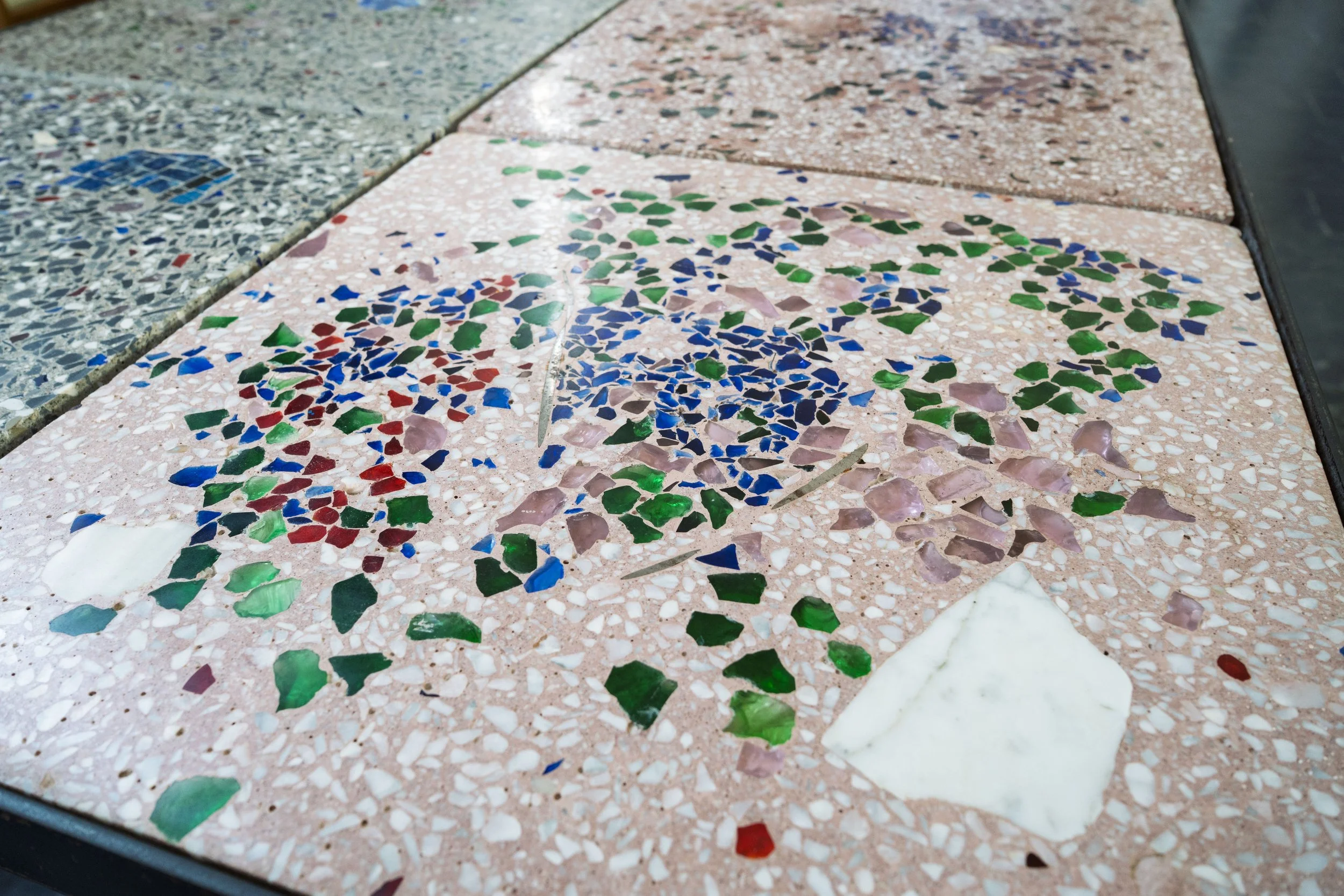
Making Dust, a video by another Irish artist Fiona Hallinan, was also a stand out work along with it’s sculptural companion piece Fragment of Mediation both staged within Sint Bavokerk a 16th-century Gothic-style church in Watou. Making Dust tells the demise of the Church of the Annunciation in Dublin. This mammoth modernist building loomed over the city from 1967 until its demolition in 2021 and according to Hallinan’s narration, was bitterly cold and was prone to leaks causing it to be unfit for use and a white elephant for the local community. While it might be tempting to use the building’s failure as emblematic of the Catholic Church’s oppressive influence on Irish society, Hallinan leans into thorny the complexities of the demolition by questioning the lack of foresight to consider its adaptive reuse for the betterment of the community and the environment. Fragment of Mediation draws attention back to Sint-Bavokerk. Resembling a path of paving stones but raised to the height of a table, Fragment of Mediation leads visitors under the church’s vaulted archways and towards the altar. What appears to be aggregate in these paving stones is actually ground and chipped fragments of the fated Annunciation.
Crushed stone, cursed contracts and borderland friction circled in my mind as my return ferry approached the eroded chalk cliffs of Dover. These cliffs being so emblematic of British nationhood – an imposing wall of whiteness that shines out across the water and yet up close is brittle and fragile. Crossing the UK border on bicycle is very different from doing so by car. Out in the open on a bike the white cliffs are a vast wall that presides over you at every moment. It feels as if the land itself is judging you and has the power to grant or deny your entry. Only a week after I cycled through border security, these cliffs bore witness to packs of balaclava clad White nationalists roaming the town and port seeking to intimidate recent arrivals. Perhaps a hex is what's needed, or maybe this friction will burn itself out as Jones foretells in her contract: “For the days of this fickle world pass like a shadow and the doomed moments of this sliding world disappear just like smoke.”